26Jun
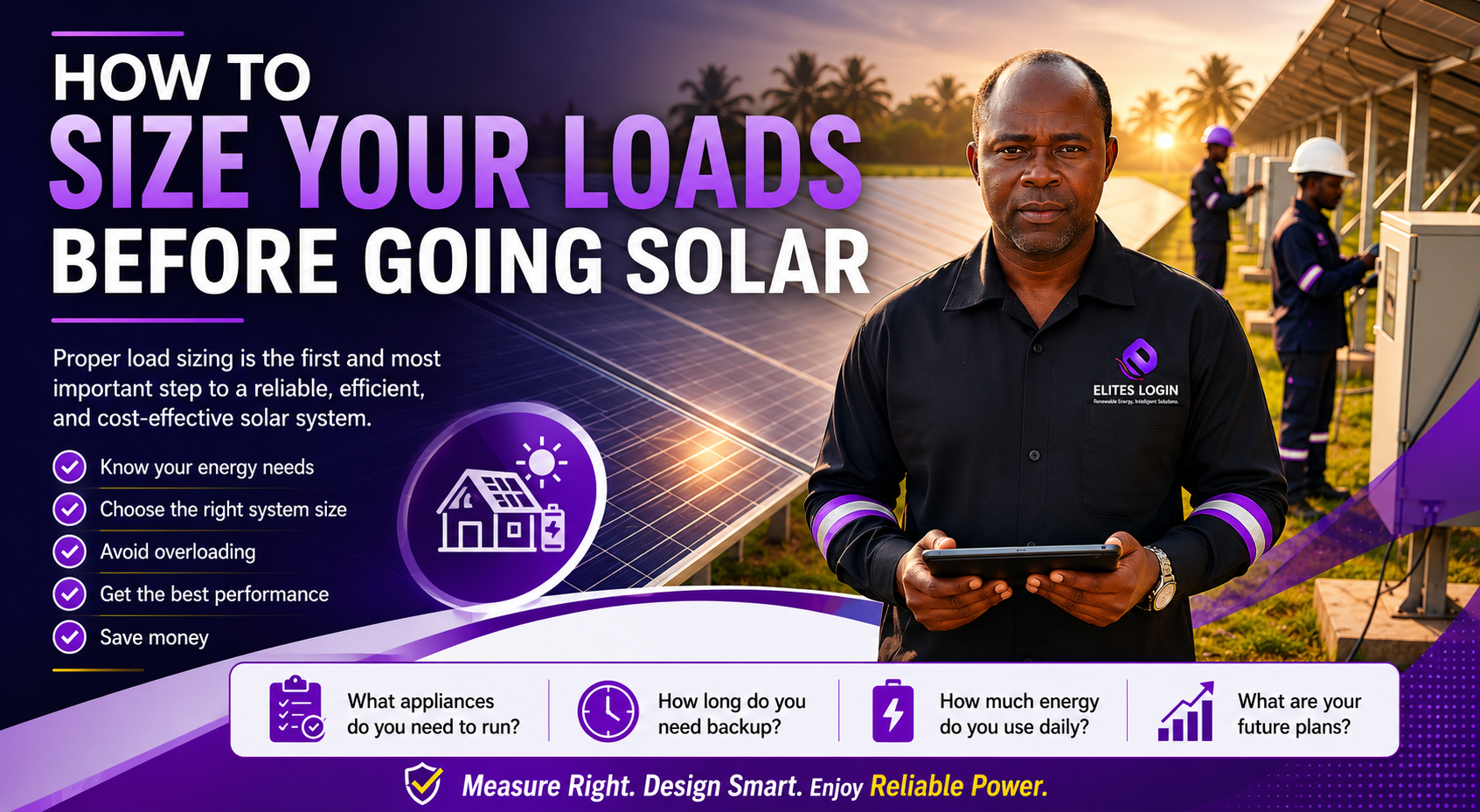
Why Load Sizing Is the First Step Before Installing Solar
A solar system should be designed around your actual energy needs — not just based on the size of your house or the price of a package.Proper load sizing helps you choose the correct:
- Inverter capacity (kW/kVA)
- Battery size (kWh)
- Solar panel capacity (kW)
- Protection equipment
- Expected backup duration
An incorrectly sized system can lead to overload, short backup time, poor performance, or unnecessary expenses.
Step 1: List All Appliances You Want to Power
Start by making a complete list of your appliances.Example:
| Appliance | Quantity | Average Power |
|---|---|---|
| LED Bulb | 10 | 100W |
| TV | 2 | 200W |
| Fan | 4 | 240W |
| Fridge | 1 | 150W |
| Decoder | 1 | 20W |
| Router | 1 | 10W |
Add the power ratings together to estimate your total running load.
Step 2: Calculate Your Total Wattage
Example:LED lights: 100W
TVs: 200W
Fans: 240W
Fridge: 150W
Others: 100WTotal running load = 790WThis means you need a solar system that can comfortably support around 800W of continuous usage.
Step 3: Consider Starting Power (Surge Power)
Some appliances need extra power when starting.Examples:
- Refrigerators
- Air conditioners
- Pumps
- Freezers
- Motors
A fridge running at 150W may require more power during startup.Your inverter must handle both:
✅ Normal running load
✅ Starting surge
Step 4: Decide What You Want to Run During Power Outages
Not every appliance must run on solar.You can create:
Essential Load
- Lights
- TV
- Internet
- Fans
- Fridge
Heavy Load
- Air conditioners
- Water heaters
- Electric cookers
- Large pumps
This helps reduce system cost while maintaining reliable backup.
Step 5: Estimate Daily Energy Usage (kWh)
Energy depends on:Power × Hours of UseExample:A 100W fan used for 10 hours:100W × 10 hours = 1000Wh
= 1kWhRepeat this for all appliances to know your daily energy consumption.
Step 6: Choose the Correct Inverter Size
A general guide:
| Load Requirement | Recommended Inverter |
|---|---|
| Up to 2kW | 2–3kW inverter |
| 3–4kW load | 5kW inverter |
| 5–7kW load | 6–8kW inverter |
| 8–10kW load | 10kW inverter |
Always leave some room for future expansion.
Step 7: Size the Battery for Backup Time
Battery size depends on how long you want power.Example:A 1kW load running for 8 hours:1kW × 8 hours = 8kWh battery requirementLithium batteries provide more usable energy compared to traditional batteries.
Step 8: Allow Room for Future Growth
Many customers add more appliances later.A good solar design considers:
- Future appliances
- More rooms
- Business expansion
- Increased energy demand
Conclusion
Correct load sizing is the foundation of a reliable solar system.Before choosing a solar package, understand:
✔ What appliances you want to power
✔ How long you need backup
✔ Your daily energy usage
✔ Future power requirementsA properly designed solar system gives better performance, longer equipment life, and better value for your investment.Measure first. Design correctly. Enjoy reliable power.
Comments