26Jun
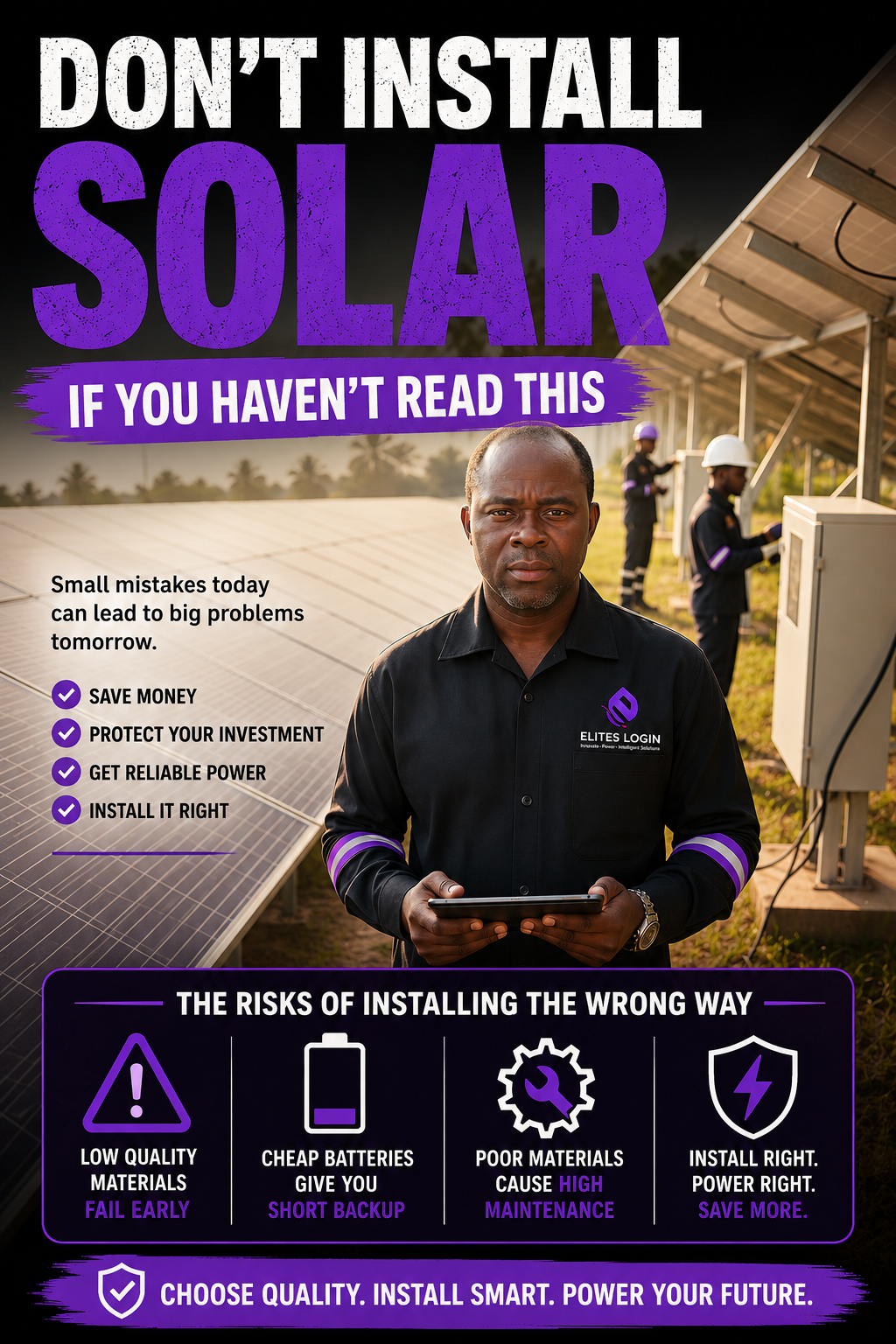
Make the Right Solar Investment: Quality Matters
Solar energy is a long-term investment designed to provide reliable power for years. However, the performance and lifespan of your solar system depend heavily on the quality of the materials used during installation. Many solar problems experienced by homeowners and businesses are not caused by solar technology itself but by poor-quality components, improper sizing, and unprofessional installation. Here are important ways to avoid low-quality solar materials and ensure you get a reliable system.
1. Choose Quality Solar Panels
Not all solar panels are the same. Low-quality panels may produce less power, degrade faster, and perform poorly under harsh weather conditions. Before purchasing, check:
- Brand reputation and product warranty
- Panel efficiency rating
- Manufacturing quality
- Certification and test reports
- Performance warranty period
A quality solar panel should maintain good performance for many years with minimal reduction in output.
2. Avoid Cheap Batteries With Short Lifespans
The battery is one of the most important parts of a solar system because it stores energy for use when sunlight is unavailable. Low-quality batteries can cause:
- Short backup time
- Frequent replacements
- Poor charging performance
- System downtime
For modern solar installations, quality lithium batteries (especially LiFePO₄) are preferred for premium systems because they offer longer life and better efficiency. Tubular batteries can also be a good option when properly sized and maintained, especially for budget-friendly systems.
3. Use the Correct Inverter Capacity
A common mistake is choosing an inverter based only on price instead of the actual load requirement. A quality solar installer should consider:
- Your appliance load
- Starting power requirements
- Future expansion
- Battery capacity
- Solar panel size
Using an undersized inverter can lead to overheating, shutdowns, and reduced lifespan.
4. Check the Quality of Cables and Protection Materials
Many installations fail because of poor electrical materials.A professional solar system should use:
- Proper solar-rated cables
- Quality breakers and isolators
- Surge protection devices
- Correct connectors
- Proper earthing system
Cheap cables may cause energy loss, overheating, and safety risks.
5. Work With Experienced Solar Professionals
Even high-quality equipment can perform poorly if installed incorrectly. Choose a company that provides:
- Proper site assessment
- Professional installation
- Load calculation
- System testing
- After-installation support
A good solar company does not only sell equipment; they design a complete energy solution.
6. Be Careful With Extremely Cheap Solar Offers
When a solar package is far cheaper than the market standard, it is important to ask questions. Low prices may mean:
- Smaller battery capacity
- Lower-quality components
- Used or refurbished equipment
- Poor installation materials
- No after-sales support
The cheapest option is not always the most affordable when repairs and replacements are considered.
7. Ask About Warranty and Support
A reliable solar provider should clearly explain:
- Equipment warranty
- Installation warranty
- Maintenance support
- Replacement process
A company confident in its products will stand behind its installation.
Conclusion
A successful solar installation is not just about buying an inverter and panels. It is about choosing reliable components, proper system design, and professional installation. Investing in quality materials from the beginning helps you enjoy dependable power, lower maintenance costs, and a longer-lasting solar system. Choose quality. Choose reliability. Choose a solar solution built to last.
Comments